
It has been clear for many years that Nigeria is a house divided, a country besieged with dysfunctional governments and rapidly declining values in all spheres of its existence. It has become very difficult to ask even the most basic questions – whether we are still in existence as a nation, whether we have totally lost our common sense of knowing what is right, and fallen prey to the weights that are breaking our institutions and tearing at the bonds and strings that hold our country, Nigeria together?
Only recently, the government of President Buhari announced and awarded a bounty of National Honours to a score of Nigerians in various fields of endeavours. Many critics of government challenged this Presidential gesture, claiming that only a few of those who received these awards are deserving of such honours. One of these critics went as far, without mentioning any names, to say that only 7 out of the 400 plus recipients are worthy of any National honours. The fierce critics of the government lamented the diminished value of these once revered conferments. Some claimed that these titles now go to the highest bidders, and that those most deserving of these honours have been forgotten.
When the list was published, I took particular interest in seeing who-and-who made the list. My interest was elicited by certain curiosity heightened by the need to know the criteria by which certain people made this list. I must confess that, apart from a few individuals that I know of their activities in nation-building and philanthropy, I didn’t recognise most of the other recipients, nor decipher how they deserved to be so honoured. That is not to say that because I didn’t know of these people’s contribution to our country, they didn’t deserve the honours. For this and other reasons, one expected that government should have taken the extra steps of providing the citizens with reasons for these awards to all the individuals. To simply cite their areas of endeavours, was just not enough. For instance, if an individual is in manufacturing, should we not be told elaborately how he or she was able to impact the economy? If a musician was equally awarded a title, did his or her music inspire some form of national consciousness, did it bring fame and fortune to Nigeria?
While I was despondently pondering upon these dustbinning of our values, I quickly reminded myself that our society is not a helpless victim of exogenous forces; that we get and deserve the calamities that have befallen us, and that we are collectively the real culprit of our problems. It is evident that alongside this particular issue under discourse here, that no other parts and corners of our lives have been left adversely unvisited.
Interestingly, my inclination to discussing and writing about this subject comes absolutely with no wistfulness, but with a sense of history resulting from my own personal family experience. For me, the issue of forgetting our National Heroes as a social pathology, has become an immoral blight and a shame of a nation that should never be allowed to continue to fester and endue in our country. This problem comes across as deliberate and almost disdainful. Indeed, the bitter lessons of this track record of misdeeds are clear, pointing to the malady of our national decision- makers’ failed obligations to make choices in a transparently open, dynamic nonlinear system that is rarely in equilibrium, and that has become incrementally straitjacketed by grand deceit and illusionary discontent and disconnect.
By my personal family experience, I am making reference to my late father’s fate in being one of the Forgotten Heroes of our country. By me personalizing his experience, I plead that readers not infer that I have a personal stake in this issue, or that I am finding an opportunity to promote family prominence or fame. Even at the risk of patronizing my father, I will only attempt at using him as a signpost for the endangered ills of our past, and the continuing ugly experiences of our today.
Today, my worry is that what gets less attention from the populace is that the pre- meritocratic society that existed in the 1960s, has now become a rigorously past historical fact. This element in our past, though tendentious, has become a synonym for uncompetitive mediocrity. I recognize the saying that history doesn’t repeat itself, but for me and for many, it rhymes in our clime. My knowledge of history offers me the fact that we keep repeating the mistakes of the past. Otherwise, how far back does one need to go to see how often our governments have neglected and failed to honour those that truly made meaningful sacrifices for our country.
Now, back to my father and the issues of the Forgotten Heroes of Nigeria. My father who was born in 1915, after attaining lofty heights in his educational pursuit, settled for a life and career in journalism. At various times in the 1940s to the 50s, he became the Editor-in-Chief of various newspapers; The West African Pilot, The Spokesman, The Guardian, The Daily Comet, all newspapers in Azikiwe’s stable. These newspapers became powerful weapons deployed in the fight for independence. My father who was in the forefront of this fight, was credited with possessing a dangerously caustic pen that he used to vilify the colonizers, and unsettled the British, especially the Royals. My father became, naturally the target of the British vile and consternation. He was arrested, locked up and dehumanized for being a thorn-in-the-flesh of the imperialists.
As a child growing up in our household in the 1950s, I witnessed my parents, especially my father, being subjected to levels of harassment by the authorities. At various times, my father was arrested and charged to court and imprisoned for writing what was considered to be seditious editorials against the colonialist. He was even accused for having the temerity to write uncomplimentary essays about the Queen, Her Royal Majesty. My father, Chukwuma Anueyiagu and his colleagues were courageous and unrelenting in their criticism and radical confrontation of the British rule. My father became a marked man for the uncomfortable and discomfited British rulers who tried unsuccessfully to shut him and his newspapers up.
Without any doubt, the efforts of the media were principally the major reasons the British relinquished their rule in Nigeria. My father and his colleagues succeeded in exposing the evils of colonial rule, awakening the consciousness of the Nigerian people who rose up, demanding for independence.
After Nigeria gained independence, my father left journalism and veered into politics and business where he recorded huge successes. He, at a time became the Chairman of NCNC, one of the top political parties of the time. He also established successful interests in the Oil business, in the hospitality, printing, agriculture and trading industries. With these successes he ventured into philanthropy. He, in the company of a few friends began the Ibo Union Education philanthropy. He was the Founding Chairman and the major contributor to the Ibo Union Elementary and Grammar Schools built in most Northern cities. These schools were opened to Nigerians from all tribes and various religious backgrounds. These beautifully built and equipped schools that equalled any imaginable international standards, provided the strong background for the growth of education in Northern Nigeria in the 1960s. Many successful non-Igbo products of these Ibo Union schools in the North include the Ombu brothers; Air Vice Marshal Emma Ombu, an exceptional jet fighter pilot, Vice Admiral Victor Ombu, Vice Admiral Jibril Ayinla, both Chiefs of the Naval Staff, and Dr. Yemi Ogunbiyi, former Managing Director of the Daily Times newspaper, and so many others.
My father’s service to our nation became even more evident when the war ended in
1970. He abandoned all his extensive enterprising businesses and stayed back to help rebuild the completely destroyed and devastated Awka, his hometown. He chaired and contributed immensely to the rehabilitation of the town’s water system, the markets, the schools, the post office and other essential infrastructural and social needs of his people.
The backdrop of this short story about my father, is a reflection of how after his commendable national contributions, he was never recognized by our government for any National Award while alive or posthumously. When he was 90 years old, he was interviewed by a team of journalists from many newspapers. I recall that the Managing Director of the Guardian and his team visited the old man in his retirement home in Awka. One of the striking questions they asked him was significant, and his profound answer was epic. The journalists asked my father what he thought about the fact that despite all he did in National affairs, he was never given a National Award. His answer was a classic: “I do not care that our dear country has not recognized and rewarded me and my colleagues…. what do I need this worthless award for? …an award that has become so commonized and given to all-comers. The Award that I await is that which my God will give me when I go very soon to meet Him … that is the worthy Award…”.
When Chukwuma Anueyiagu died in 2015 at the ripe age of 100 years, he was truly honoured by his younger colleagues in the media. Six of the major newspapers in the country wrote glowing editorials extolling his virtues and praising his courage and bravery in national affairs. One of the editorials headline was: Chukwuma Anueyiagu, The GodFather of Journalism Goes Home. One of the publications deserves to be quoted thus: “Today, as Nigerians continue to develop the penchant for forgetting the people of yesterday, they spend so much time and expend so much energy singing the praise of the people of today, even when they are unworthy of such praises. In the process they build monuments to perpetuate the memory of those who have left no memory… They will be wise to stop polishing pebbles and darkening diamonds, start giving honour to whom it is due…”
With the recent death of the veteran nationalist Chief Mbazulike Amechi, this issue of our Forgotten Heroes reappeared in the banner of our National discourse once again. When my father died, Amechi attended his burial and with little fanfare hoisted a large banner in the middle of my father’s compound with the inscription: “THE FORGOTTEN HEROES OF NIGERIAN INDEPENDENCE”. He read a long and moving funeral oration for my father in which he extolled his national contributions, and in which he expressed regrets that he and his colleagues like; Babatunde Jose, Malam Raji Abdallah, Mokwugo Okoye, Lateef Jakande, Bob Ogbuagu, Adewale Fashanu, Nduka Eze, Ebun Adesioye, Kola Balogun, Peter Osugo, AK Blankson, AK Disu, Alade Odunewu, Osita Agwuna, Anthony Enahoro, MCK Ajuluchukwu, Ikenna Nzimiro, Okoye Isiadinso, and many others, who toiled tirelessly and selflessly for the benefit of the country, have remained unsung, forgotten, and neglected. His oration was quite a chilling and remarkable reminder that somethings are obviously not right with our country, Nigeria.
If a country cannot say with confidence where it has come from, it may be impossible to know where it is going. Identifying these kinds of trends has historically helped countries prepare for their future. After reflecting on the practices of our government in neglecting to rightly reward those who deserve to be honoured, it is easy to conclude that the inflexibility of our rulers in this department should be a major concern of all right-thinking Nigerians.
By using my father’s example as a case study, I was only trying to imply the closeness of this malaise to reality. Also, the fact that my father never cared and never complained about this abhorrent treatment, made it even more profoundly relatable to nationalism and self sacrifice. For those of us who were crying more than the bereaved, my father would say to us with prophetic perspective, that this neglect by government is a symptom of injustice, which God emphatically stands against, but uses as a gauge to measure and test our commitment and loyalty to Him and to our fellow human beings. He often said that when the people you do good for do not reward you, it is a sign showing forth the Goodness of God. My father professed rather philosophically, that the purpose of worldly wickedness and evil is designed by God for the purpose of allowing us to be humble and allowing us to gain the happiness of heaven by knowing, loving and serving God in this world. He saw a deeper purpose in the things he did, than in receiving any National Honours from a country that cares less about its citizens, but rewards some unworthy and undeserving persons of questionable character with these Phantom National Honours Awards.
This essay is not in the least suggesting or implying that everyone on that list, and most people that have in the past received these honours are unworthy or undeserving of the awards. Instead, it is a perspicacious look at the raging illogical inconsistencies and the lack of righteousness in our government’s actions, and our predictable deprecation and imprecation of the processes leading to the selection of the recipients of these conferments. When we witness that our society rewards people of questionable character and impugned integrity, and ignores hardworking and honest citizens whose national service become self-sacrifice, we know that our country is doomed.
These National Honours Awards should be transparent and should expouse diligent scrutiny to ensure and drive the opportunity for the transformation of citizens’ reward for hardwork, diligence and loyalty to country. For the good citizens who have received National Honours deservedly, you know yourselves, and I implore you to hold on to the awards with pride and joy, and for those who acquired these titles through the backdoor, hide your face in shame and banish your plaques in the dustbin of a pyrrhic and nugatory crevasse. Our government must in this regard be guileless in displaying sincere and trustful dispositions by showing us that hardwork and loyalty must teach and point us to the essence of life in the affairs of our country.
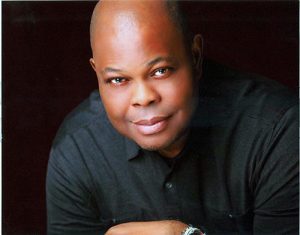
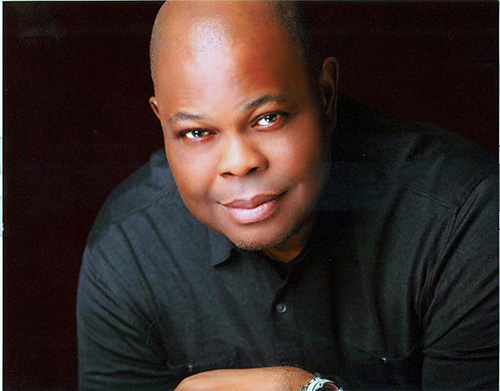
DR. OKEY ANUEYIAGU
A Political Economist,
Writes from Ikoyi Lagos